
Packaging is where regulation, brand and customer experience meet. Build localization into the process before artwork begins, and you can reduce rework, protect consumer trust and move into new markets with greater confidence.
For content teams, a packaging file can look like one more asset to translate. It is much more than that. A food or drink pack combines regulated information, product data, marketing claims and brand voice in a space where every word, symbol and line break has to work.
When localization comes in late, the result is rarely just awkward copy. A longer translation can push mandatory text below the minimum type size. An allergen can lose its emphasis during reflow. A market-specific claim can end up in a country that doesn’t permit it. An old ingredient list can make its way into approved artwork.
The good news is that international packaging becomes far easier to manage when you treat market requirements, language and artwork quality assurance as one connected workflow. This guide explains the main considerations for the United States, European Union, Great Britain and Northern Ireland, then sets out a practical process content teams can use before opening the first design file.
Important: This article is a practical overview, not legal advice. Requirements vary by product, category, route to market and the claims you make. Always confirm the current rules with an appropriately qualified regulatory specialist before approving artwork for print.
Jump to a section
- Food and beverage packaging requirements at a glance
- United States: design around the FDA framework
- European Union: one core regulation, many market decisions
- United Kingdom: plan separately for Great Britain and Northern Ireland
- What localized packaging changes for the customer and the business
- A localization workflow for packaging content teams
- The pre-print localization checklist
- How Global Lingo supports global packaging content
1. Food and beverage packaging requirements at a glance
The table below is a starting point, not a substitute for product-specific advice. It shows why a single master pack rarely works everywhere without planned market variants.
Comparing requirements at a glance
| Requirement | United States | European Union | Great Britain and Northern Ireland |
|---|---|---|---|
| Main framework | FDA rules, including 21 CFR Part 101, for most foods; USDA FSIS rules for most meat, poultry and processed egg products | Regulation (EU) No 1169/2011 on food information to consumers, plus product- and country-specific rules | Great Britain uses assimilated food information rules; Northern Ireland remains aligned with relevant EU food rules, with Windsor Framework arrangements |
| Mandatory language | Required statements generally appear in English. Using another language can require repeating the mandatory information in that language | Mandatory information must be in a language easily understood in the market; Member States can stipulate the language or languages required | English is the practical baseline in Great Britain. Northern Ireland follows the relevant EU language framework |
| Nutrition format | Prescribed Nutrition Facts label, with serving-based values and % Daily Value | Mandatory declaration is generally given per 100 g or 100 ml, with optional additional per-portion information | Great Britain broadly retains the EU-style nutrition declaration; Northern Ireland follows relevant EU rules |
| Allergens | Nine major allergens, including sesame | Fourteen regulated allergens, emphasized in the ingredients list | Fourteen regulated allergens, emphasized in the ingredients list |
| Responsible business address | Name and address of the manufacturer, packer or distributor, as applicable | EU food business operator or EU importer address | Current Great Britain guidance requires a UK, Channel Islands or Isle of Man address; Northern Ireland requires a Northern Ireland or EU address. Monitor forthcoming UK-EU SPS changes |
| Current watchpoint | The FDA’s front-of-package nutrition proposal is still under development | PPWR generally applies from 12 August 2026, with obligations phased over time; stronger green-claims rules apply from 27 September 2026 | Market-specific GB/NI rules, NIRMS labeling and expected changes under the UK-EU SPS agreement |
The biggest difference is not the number of mandatory elements. It is how each market defines, displays and approves those elements. That is why localization belongs in packaging design from the beginning, not bolted on after the English artwork is done.

2. United States: design around the FDA framework
The US Food and Drug Administration regulates most packaged food and drink, and its Food Labeling Guide is the primary reference point. The US Department of Agriculture’s Food Safety and Inspection Service has jurisdiction over most meat, poultry and processed egg products, so the first task is to confirm which authority and product rules apply.
For an FDA-regulated product, the pack will usually need a statement of identity, net quantity, ingredient list in descending order by weight, allergen declarations, the name and address of the responsible business, and a Nutrition Facts label. Other requirements may apply to claims, flavors, colors, origin, handling instructions or a specific product category.
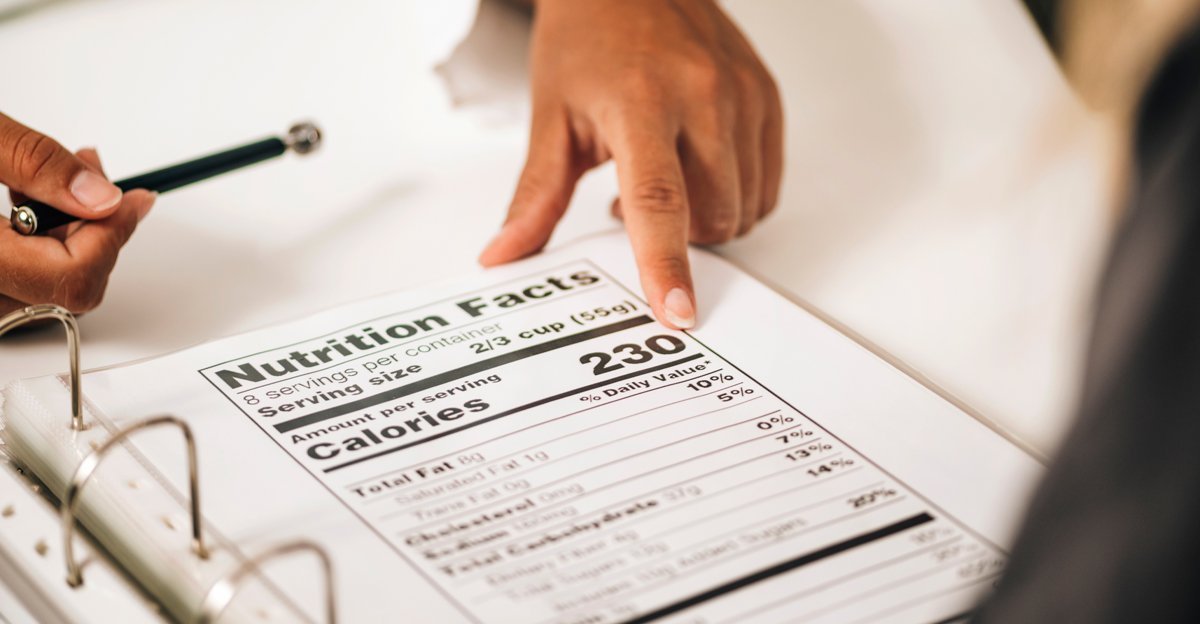
Treat the Nutrition Facts label as a fixed content component
The FDA updated the Nutrition Facts label in 2016, with most compliance dates falling in 2020 and 2021. The panel is highly prescribed. The applicable rules dictate exactly how you present serving information, calories, nutrients, added sugars and % Daily Value, so build the panel as a controlled component rather than styling it like ordinary brand copy.
Content teams should also keep an eye on front-of-package nutrition labeling, part of the FDA’s 2026 priority deliverables. The FDA proposed a compact Nutrition Info box in 2025. As of August 2026, it has not become a final requirement; the FDA is still reviewing comments and considering the content of a final regulation. If you expect a pack to stay in circulation for several years, building in some flexibility on the front panel may reduce future redesign work.
Do not treat non-English copy as a decorative extra
US rules generally require mandatory label statements in English. If a label uses another language, the FDA can require the mandatory information to appear in that language as well. That means adding a Spanish headline or product description may affect far more than the front-of-pack message.
For content and design teams, the practical lesson is simple: decide the language strategy before artwork begins. A bilingual pack needs enough space for complete, accurate information, not just a translated strapline. It also needs the same level of control over ingredients, allergens, nutrition information and warnings in every language used.

3. European Union: one core regulation, many market decisions
Regulation (EU) No 1169/2011, often called the Food Information to Consumers or FIC Regulation, provides the main EU framework for prepacked food. Mandatory particulars include the name of the food, ingredients, the fourteen regulated allergens, net quantity, date marking, relevant storage conditions and instructions, the responsible EU food business operator or importer, and a nutrition declaration where required.
The framework also affects design. Mandatory text must be legible and generally use a minimum x-height of 1.2 mm, reduced to 0.9 mm where the package’s largest surface is less than 80 cm². If you add translations only after approving the layout, you can end up choosing between an overcrowded panel and text that is too small.
The language rule is market-specific
Article 15 requires mandatory food information to appear in a language easily understood by consumers in the Member State where the product is sold. Member States can set more specific language requirements, so “an EU label” is not a complete localization brief.
Belgium shows why market mapping matters. Its official guidance requires mandatory food information in the official language or languages of the linguistic region where you market the product. A product distributed nationwide may therefore need Dutch, French and German, while a more limited route to market can create a different language requirement. Weigh the distribution plan, retailer expectations and packaging format together.
Wine also has category-specific rules. Since December 2023, operators have had to provide ingredient and nutrition information for relevant wine products. You can provide the full ingredient list and nutrition declaration electronically, such as through a QR code, but the energy value and allergens remain on the physical label. Digital disclosure can create space, but it does not remove the need for controlled source content, market-appropriate language and a tested consumer journey.
PPWR and environmental claims need their own content workstream
The Packaging and Packaging Waste Regulation, Regulation (EU) 2025/40, generally applies from 12 August 2026. It covers the packaging lifecycle, including composition, manufacturing, reuse, recyclability, waste prevention and producer responsibilities. Its obligations phase in over time: the EU aims for packaging placed on the market to be recyclable in an economically viable way by 2030, so treat August 2026 as a starting point, not the deadline for every future requirement.
In parallel, the EU’s rules on empowering consumers for the green transition apply from 27 September 2026. They strengthen protection against greenwashing, including vague environmental claims that cannot be properly demonstrated.
For packaging teams, this is both a compliance and content-governance issue. Don’t translate terms such as “green,” “eco-friendly,” “recyclable” or “made with recycled content” from a generic master claim and roll them out unchanged. Each claim needs a defined meaning, supporting evidence, a clear scope and market-level approval. Local recycling marks, disposal instructions, deposit-return information and extended producer responsibility requirements may also need separate treatment.

4. United Kingdom: plan separately for Great Britain and Northern Ireland
The main food labeling rules in Great Britain have changed relatively little since the UK’s exit from the EU, but “relatively little” does not mean “identical”. Product-specific rules and the relationship between Great Britain and Northern Ireland can still change the address, origin wording, identification marks and other content required on pack.
Great Britain: check the responsible address and category rules
Current guidance states that food sold in Great Britain must include a physical address in the UK, Channel Islands or Isle of Man for the responsible food business or importer. An email address or telephone number is not enough. UK government preparation guidance published in 2026 says the UK and EU expect to make food business operator addresses mutually acceptable under a forthcoming UK-EU sanitary and phytosanitary agreement. Until the relevant changes take effect, treat that as a rule to monitor rather than a shortcut for current artwork.
You must include country-of-origin information where omitting it could mislead consumers, and additional rules apply to particular products. This is more nuanced than a blanket requirement to replace every reference to EU origin with an individual country name. Confirm the rule for the product, its primary ingredient and the imagery or claims used on the pack.
Metric units remain the standard for most packaged goods in Great Britain. You may add supplementary imperial information without giving it greater prominence, and a narrow exception allows milk in returnable containers to be sold by the pint. This is another area where product format matters.
Northern Ireland: map the route to market
Food sold in Northern Ireland remains aligned with relevant EU food information rules and generally requires a Northern Ireland or EU food business address. Goods moved from Great Britain to Northern Ireland through the Northern Ireland Retail Movement Scheme (NIRMS) can also be subject to “Not for EU” labeling.
That requirement does not mean every product sold in Northern Ireland needs those words printed on the individual pack. The rules depend on the product and movement route. Some goods need individual labels; others use box- or shelf-level labeling; and exemptions apply, including to many processed, shelf-stable products without products of animal origin. Check the current NIRMS guidance and commodity information for each product.
If you sell in both Great Britain and Northern Ireland, create separate requirement rows in your market matrix even when you share much of the artwork. That small planning decision helps stop you from copying an address, origin statement or scheme label into the wrong market version.

5. What localized packaging changes for the customer and the business
Translation changes the language. Packaging localization adapts the complete customer-facing experience for a specific market: mandatory wording, units, claims, symbols, language hierarchy, reading direction, layout and brand voice.
Done well, it has an impact in four areas.
- Safety and understanding. Consumers can identify ingredients, allergens, preparation instructions and warnings quickly and accurately.
- Trust and brand credibility. The pack reads like something built for the market, not translated as an afterthought. Natural language, appropriate claims and a considered layout signal care.
- Retailer and launch readiness. Teams complete market-specific content, approvals and artwork checks before files reach the printer or retailer review, reducing last-minute changes.
- Operational control. Approved terminology, reusable translations and clear version ownership make it easier to update multiple SKUs without introducing inconsistencies.
This does not mean every line should be creatively adapted. Ingredient names, allergen declarations, nutrition content and mandatory warnings require strict accuracy and regulatory control. Brand messages and product descriptions have more room for transcreation, but they still need to fit local advertising, nutrition and health-claim rules. A strong workflow classifies the content before translation so every element receives the right level of freedom and review.

6. A localization workflow for packaging content teams
1. Build a market and SKU matrix
List every destination, product, pack size, sales channel and route to market. Record the regulator, mandatory languages, responsible business address, required declarations, local marks and retailer requirements for each combination. Separate Great Britain and Northern Ireland; treat each EU Member State as a market decision rather than one “EU” row.
2. Create one approved source of truth
Bring the product name, formula, ingredient list, allergens, nutrition data, claims, warnings, instructions, origin and business details into a controlled source. Identify the owner of each field and the date you approved it. Packaging localization cannot compensate for unstable or conflicting source content.
3. Classify content by risk
Separate regulated copy, technical product information, operational instructions and brand copy. Decide which content must remain tightly controlled, which you can localize for comprehension and which you can transcreate for impact. This classification should shape the translation and review workflow.
4. Localize with subject-matter expertise and reusable language assets
Use linguists who work in the target market and understand food and beverage terminology. Give them the approved source, product context, pack images, character constraints and claim guidance. A termbase, style guide and translation memory help keep ingredient names, recurring warnings and brand language consistent across SKUs and updates.
AI and machine translation can support speed and consistency in an appropriately designed workflow, but risk should determine the level of automation. Allergen, safety and regulated content need qualified human review and the relevant regulatory sign-off.
5. Design for every language, not only the source language
Plan for text expansion, accented characters, non-Latin scripts and right-to-left reading. Test the longest likely language early. Protect minimum type sizes and required fields of vision before allocating space to optional copy. Where the format is small, consider whether market-specific packs, a larger label, an approved peel-back format or permitted digital information would create a better result.
6. Review the language in artwork
A correct translation can become incorrect in layout. Review the final artwork, not only a bilingual spreadsheet. Check line breaks, missing text, font support, allergen emphasis, decimal separators, units, date formats, reading order, QR destinations and the relationship between text and icons. Include printer proofs where color, legibility or finishing can affect the information.
7. Record approval and control change
Give every pack a clear SKU, market, language, version and approval record. Define who can change source copy and how updates flow to every affected locale. When a formula, claim or regulation changes, use the same controlled workflow rather than editing individual artwork files by hand.

7. The pre-print localization checklist
Before approving a food or beverage pack, ask:
- Have we confirmed the exact market, product category and route to market?
- Are the regulator and current guidance correct for this product?
- Does the pack contain every mandatory language required by law and the retailer?
- Do ingredients, allergens and nutrition data match the latest approved product source?
- Are allergens named and emphasized correctly in every language?
- Are units, rounding, date formats and serving conventions correct for the market?
- Have you substantiated and locally approved nutrition, health, origin and environmental claims?
- Are the responsible business address, origin wording, recycling information, deposit-return marks and any NIRMS labeling correct?
- Does the final artwork preserve minimum type sizes, required fields of vision, font support and reading order?
- Have linguistic, regulatory, brand, packaging and print owners approved the same final version?
If any answer is uncertain, pause the print approval. A short clarification at this stage is faster and less expensive than changing finished packaging.

8. How Global Lingo supports global packaging content
Packaging localization works best as a managed content workflow, not a hand-off at the end of design. Global Lingo brings together native-speaking linguists, subject-matter expertise, dedicated project management and language technology to help teams deliver accurate, consistent and culturally relevant content across more than 150 languages, in line with the approach covered in our guide to five common food-industry challenges.
For food and beverage teams, that can include translating and localizing ingredient and allergen content, product descriptions, preparation instructions, claims support content and consumer communications; building approved glossaries and translation memories; coordinating multilingual review; and checking language in its final artwork context. Regulatory approval remains with your appointed specialists, while the localization workflow helps carry approved source content into every language and version with control. Our localization services are built around exactly this kind of controlled, multi-market workflow.
Global Lingo is certified to ISO 9001 for quality management and ISO 27001 for information security. You can configure workflows around your risk, technology preferences, timelines and existing approval process, with human expertise applied where judgment matters most.
Planning a multi-market launch? Speak to Global Lingo before artwork begins, and build a packaging localization workflow that is ready to scale.