
A structural shift in travel behavior
The global travel and hospitality industry is undergoing a profound transformation. While COVID-19 initially brought travel to a near standstill, its long-term impact has surprisingly fueled a renewed surge in travel, driven not by traditional tourism patterns, but by the normalization of remote and hybrid work. Medium states, “The digital nomad movement is growing faster than most tourism sectors. According to MBO Partners’ 2024 Digital Nomad Report, over 40 million people globally now identify as digital nomads, with nearly 18 million coming from the United States alone.”
What began as a temporary shift has become a structural change in how people live and work. Employees are no longer tethered to a single location, and as a result, travel is no longer confined to vacation windows. Instead, it is increasingly integrated into everyday life, blurring the lines between business and leisure, work and exploration.
For travel and hospitality brands, this shift presents a massive opportunity. However, capturing this demand requires more than reopening routes or expanding inventory. It requires a deep understanding of a more global, more mobile, and more diverse customer base. In this new landscape, localization is emerging as a critical differentiator between brands that scale effectively and those that struggle to connect.

The rise of hybrid work, and the expansion of travel
The widespread adoption of remote and hybrid work has fundamentally altered travel demand patterns. Employees now have the flexibility to work from virtually anywhere, leading to the rise of trends such as “workations,” extended stays, and digital nomadism.
Unlike pre-pandemic travel, which was largely segmented into business or leisure, today’s travel behavior is more fluid. A traveler might attend meetings in the morning, explore a new city in the afternoon, and extend their stay over several weeks, all while remaining fully productive. As ScienceDirect summarizes, “More and more companies customize their business strategies towards a greater extension of remote work: Hence, companies are generating more flexibility and freedom for their (permanent) workforce in terms of where, when and how they perform their work.”
This shift has led to:
- Increased demand for longer stays and flexible booking options
- Growth in secondary and non-traditional destinations
- A rise in cross-border travel among remote professionals
Greater demand for seamless digital experiences across markets. Importantly, this new wave of travelers is inherently global. A survey taken by Time Doctor found, “More than half (59%) of respondents indicated that a remote or hybrid workplace model motivates them, their friends, and family to travel more.” Remote workers are choosing destinations based on lifestyle, affordability, and cultural experience, not just proximity. As a result, travel and hospitality brands are engaging with audiences that span multiple languages, regions, and cultural expectations more than ever before. Large hotel brands like Hilton and Marriott, as well as smaller operators, have been adapting their strategies accordingly. According to Hospitality.today, “Hotels that adapt content, pricing, payment methods, and services to specific source markets see stronger engagement and booking outcomes.”

Global demand: A more diverse traveler profile
The new travel landscape is not only larger, but also more diverse.
Emerging markets are playing an increasingly important role in outbound and inbound travel. At the same time, younger generations, particularly millennials and Gen Z, are driving demand for flexible, experience-driven travel that aligns with remote work lifestyles. Fortune stating, “McKinsey reports that Millennials and Gen Z travel more frequently than older cohorts, averaging close to five trips per year compared to fewer than four among GenX and Baby Boomers. They also allocate approximately 29% of their income to travel, highlighting that travel has become a regular part of lifestyle rather than an occasional activity.”
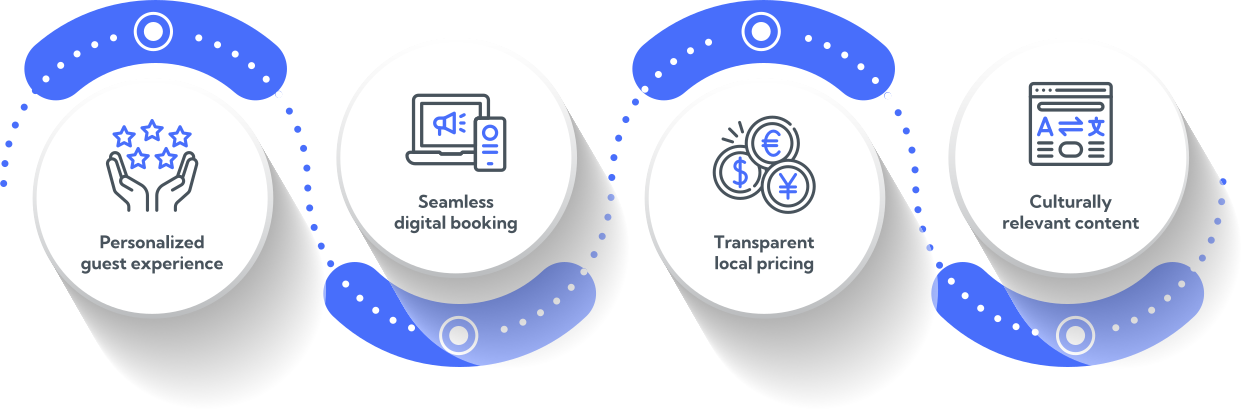 These travelers expect:
- Personalized, culturally relevant experiences
- Digital-first interactions across devices and platforms
- Transparent, localized pricing and policies
- Content that reflects their language and cultural context
This evolution mirrors broader global trends seen in other industries, where growth is increasingly driven by non-Western markets and multilingual audiences. As highlighted in similar global market shifts, success depends not just on reaching new audiences, but on resonating with them authentically.
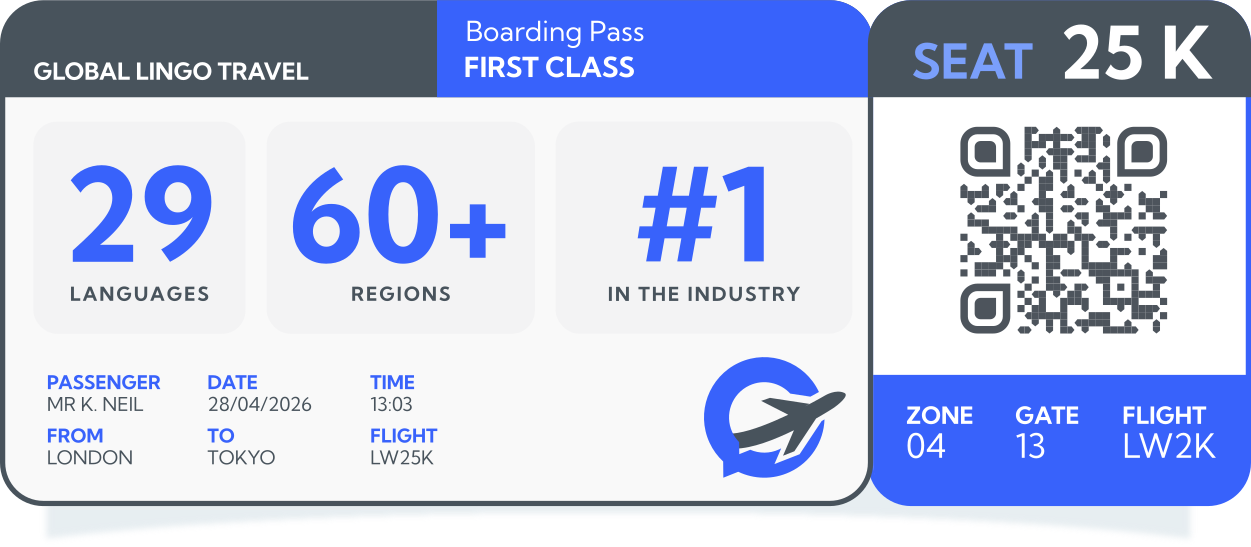
Localization enables brands to meet these diverse expectations by adapting language, content, and experiences to local markets. It builds trust, enhances personalization, and ensures relevance, turning global reach into authentic connection with today’s multilingual travelers. Like Radisson Hotel Group states, “The Group’s forward-thinking localization strategy includes online journeys in 29 languages, personalized for more than 60 regions, a new record in the hospitality industry.”
Localization in travel: Beyond translation
In a global, hybrid-driven travel economy, localization is no longer limited to translating websites or booking interfaces. It encompasses the entire customer journey, from discovery to booking to in-destination experience. In 2020 NBC Los Angeles said that, “American Airlines announced today that it is testing technology at Los Angeles International Airport that interprets 29 languages to help passengers in its airport lounges.”
Effective localization in travel and hospitality includes:
- Language accessibility: Ensuring content, customer support, and booking flows are available in multiple languages
- Cultural adaptation: Aligning imagery, messaging, and offerings with local norms and expectations
- Regulatory alignment: Adapting to local travel regulations, tax structures, and compliance requirements
- Digital localization: Optimizing for region-specific platforms, payment methods, and user behaviors

The cost of not localizing
Failure to localize in the travel and hospitality sector carries significant business risk.
In an industry where competition is high and switching costs are low, poor localization can result in:
- Lost bookings due to unclear or inaccessible information
- Reduced customer satisfaction and negative reviews
- Missed opportunities in high-growth international markets
Research across industries consistently shows that poor localization can cost businesses a significant portion of potential revenue. In a travel market rebounding and expanding under new behavioral dynamics, this represents billions in unrealized growth.

Localization as the bridge between flexibility and growth
The rise of remote and hybrid work has fundamentally reshaped the travel and hospitality industry. Travel is no longer a discrete activity; it is an integrated part of how people live and work.
This shift has unlocked new demand, new customer segments, and new global opportunities. But it has also introduced greater complexity, requiring brands to engage with more diverse audiences than ever before.
Localization is the bridge between this complexity and scalable growth.
As a leader in language services and global content strategy, Global Lingo partners with travel and hospitality organizations to navigate this evolving landscape, helping brands deliver culturally relevant, accurate, and high-impact experiences across markets. In an industry defined by connection and experience, the ability to speak to travelers in their language, both literally and culturally, is no longer optional. It is the foundation for trust, engagement, and long-term success.