
Whether it’s a store associate misunderstanding a policy update because the training only exists in English, an eCommerce team launching product pages into a new market without fully localized content, or a customer trying to navigate a return, warranty, or product safety message that is technically translated but not truly clear, retail brands face a familiar problem: multilingual communication gaps create commercial risk.
Left unchecked, those gaps can lead to:
- Health and safety risks for customers and staff
- Brand inconsistency across markets
- Lost conversions and abandoned baskets
- Customer service pressure and avoidable complaints
- Unnecessary risk to growth, margin, and market expansion
What connects these challenges? Language. It sits behind product information, store operations, customer support, compliance, workforce training, and market research. If there is one thing to take away from this article, it is that when multilingual communication fails in retail, the cost shows up in rework, delays, poor customer experience, and missed revenue.
For retail teams operating across regions, channels, and languages, a Language Service Provider can help solve five of the most common problems.
Jump to section:
- Product information and retail labelling
- Multilingual workforce training
- Customer service and returns communication
- Retail safety and compliance communication
- International market research and retail growth
- How an LSP can support the retail industry
How an LSP can support the retail industry
An LSP offers far more than simple text translations. In practice, the right partner helps retail businesses:
- Manage multilingual content across ecommerce platforms
- product packaging, store communications, training, customer support, and market research.
This level of support usually includes a broad range of services such as:
- Certified translation services
- eLearning localization services
- Software localization services
- Website localization services
- Terminology management
- Multilingual QA
- Telephone interpreting services
- Professional transcreation
A strong LSP also brings dedicated project management, tailored workflows, language technology integrations and subject matter expertise. This is the kind of end-to-end support retail brands often need when multiple departments are involved.
Retailers and in-reality, most businesses, rarely have a single translation issue. More often, they face connected challenges spread across ecommerce, merchandising, operations, customer experience, compliance, HR, and insights.
In this article, we share 5 common challenges the retail industry faces and how an LSP can help overcome them.
Challenge #1: Product information and retail labelling
Product information is one of the clearest examples of why retailers need a comprehensive localization solution, not just straightforward translation.
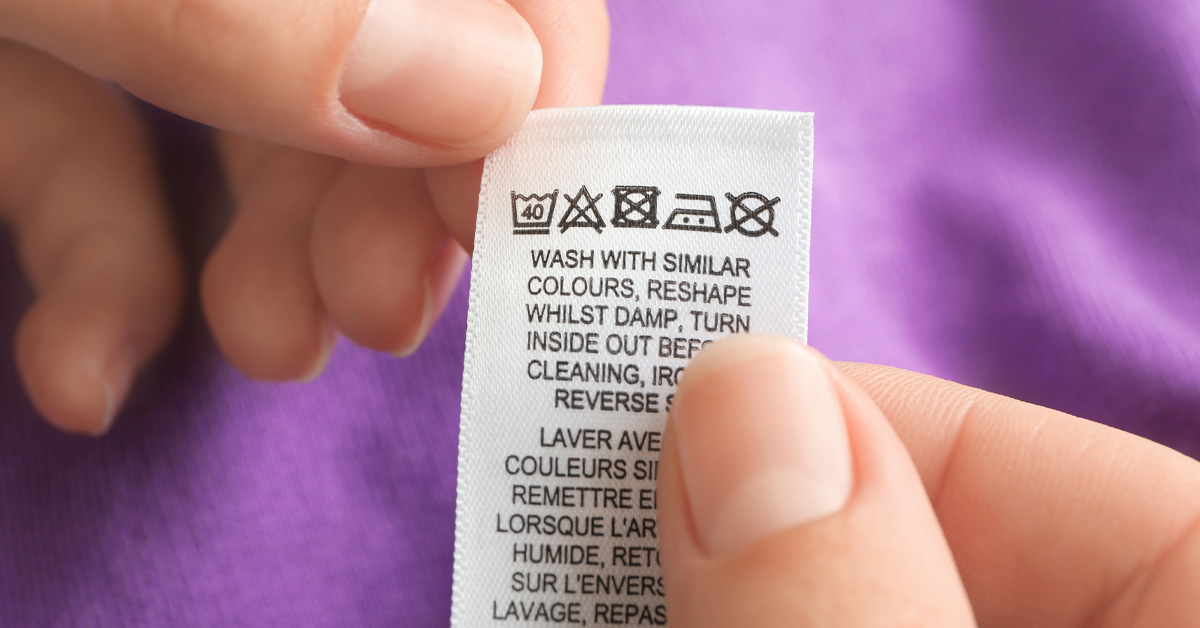
Retail brands today sell across websites, marketplaces, apps, and in-store environments. Product names, descriptions, sizing, care instructions, ingredients or materials, warnings, origin statements, and promotional claims all need to make sense in-market. In some cases, they also need to meet local regulatory and consumer protection requirements.
A single source version rarely works across every region. The issue lies across terminology, measurement units, product naming conventions, cultural relevance, legal wording, formatting, and the way customers browse and buy in different markets.
For retail teams, common pressure points include:
- Product titles and descriptions that do not convert in translation
- Size guides and fit information that confuse customers
- Material, care, or safety wording that varies by market
- Promotional claims that do not align with local expectations
- Marketplace listings that become inconsistent across channels
How an LSP can strengthen your product content
A language service provider helps turn product content into a governed process rather than a last-minute task. That can include:
- Approved brand and product terminology
- Translation memory for recurring catalogue content
- Multilingual copy adaptation for ecommerce and marketplaces
- Desktop publishing for POS and printed retail materials
- In-context linguistic review
- Version control across SKUs, campaigns, and regions
This is especially useful for merchandising, ecommerce, and localization teams working at pace. In retail, deadlines are tight, content volumes are high, and mistakes tend to multiply quickly once a product goes live across multiple channels.
A common mistake is to translate product content after creative, technical, and commercial decisions have already been finalized. A better approach is to structure source content first, define terminology centrally, and localize into market-ready formats from the start. That reduces rework and improves consistency.

Challenge #2: Multilingual workforce training
Retail brands can have strong operating procedures on paper and still struggle in practice if workforce training does not land.
This is a major issue across store networks, distribution centers, warehouses, customer service teams, and franchise environments. Retail often depends on multilingual, fast-moving teams. When onboarding, compliance, product knowledge, or process training is unclear, the impact shows up in service inconsistency, operational errors, and reduced confidence on the frontline.
Typical retail training challenges include:
- Onboarding content that assumes one language fits all
- Store procedures that are understood differently by region or team
- Product knowledge training that loses nuance in translation
- Health, safety, and loss prevention content that is difficult to follow
- eLearning modules that are completed, but not properly understood
How an LSP can enhance multilingual training
An LSP can help retail businesses localize training content in ways that are practical and scalable. That may include:
- Onboarding modules
- Store operations training
- Health and safety content
- Loss prevention and compliance training
- Product knowledge modules
- Subtitles and voiceover for video learning
- Assessments, quick-reference guides, and microlearning assets
- All of the above can be included in eLearning Localization services
Effective training localization is not just about language conversion. It often involves plain-language editing, cultural adaptation, visual reinforcement, and technical QA. For retail L&D and operations teams, that matters because comprehension on the shop floor is more important than simple completion rates.
A common mistake is relying on local managers or bilingual staff to explain the “real meaning” informally. That may solve an immediate problem, but it creates inconsistency and makes quality control far harder at scale.

Challenge #3: Customer service and returns communication
Customer communication is one of the most commercially sensitive areas in retail. It is also one of the easiest to overlook until something goes wrong.
When customers cannot clearly understand delivery updates, return instructions, warranty information, product support content, or complaint responses, trust drops quickly. In cross-border retail, poor multilingual communication can turn a manageable issue into a customer experience problem that affects reviews, repeat purchase, and brand perception.
This challenge usually appears across:
- Returns and refund policies
- Delivery and tracking messages
- Warranty and aftercare information
- Chat, email, and support scripts
- FAQs and self-service help centers
- Complaint handling and escalation communications
How an LSP can improve retail customer communication
A language service provider can help retail brands create clear, consistent customer-facing language across every touchpoint. That includes:
- Translating and localizing customer support content
- Standardizing terminology across help channels
- Adapting tone of voice to suit local audiences
- Creating multilingual templates for common service journeys
- Reviewing high-risk communications for clarity and usability
This matters for customer experience leaders, ecommerce managers, and operations teams because customer service is not just a support function. In retail, it is part of the brand experience.
A common mistake is treating customer communication as purely functional. In reality, it shapes confidence, retention, and perception. A message can be technically accurate and still feel unclear, awkward, or unhelpful to the customer reading it.

Challenge #4: Retail safety and compliance communication
Retail safety communication covers the instructions, notices, warnings, and operational updates that help stores, warehouses, and customer-facing environments run safely and compliantly.
That includes both staff-facing and customer-facing content. In some settings, it may relate to equipment use, emergency procedures, manual handling, workplace safety, theft prevention, incident reporting, and product safety notices. In others, it may extend to signage, age-restricted product communications, recall notices, and policy updates.
The challenge is not simply whether the information exists. It is whether people can understand and act on it quickly in the moment.
Common examples include:
- Store and warehouse SOPs
- Emergency and evacuation notices
- Incident and recall communications
- Staff signage and operational updates
- Product warnings and customer notices
- Compliance documentation across multiple markets
How an LSP can support safety and compliance in retail
An LSP can help by localizing safety and compliance documents and adapting them for practical use. That may involve:
- Document translation
- Linguistic QA and sign-off
- Multilingual signage
- Desktop publishing
- Voiceover and subtitles for training content
- Interpreting support during audits, briefings, or investigations
This challenge affects compliance, HR, operations, and regional leadership alike. Even strong processes become vulnerable if the communication around them is too dense, too inconsistent, or too difficult to act on under pressure.
A common mistake is assuming that a direct translation is enough. In practice, safety and compliance communication needs to be clear, usable, and aligned with how retail teams work across shifts, stores, and regions.

Challenge #5: International market research and retail growth
The fifth challenge is often less visible, but it shapes everything that follows: international growth depends on insight that travels well.
Retail brands looking to enter new markets need more than translated surveys and reports. They need comparable insight that reflects how customers think, browse, buy, and respond in different regions. That means research questions, product concepts, campaign messaging, and brand propositions must make sense culturally and linguistically before commercial decisions are made.
Retail market research localization often covers:
- Customer surveys
- Brand tracking studies
- Concept testing
- Shopper interviews and focus groups
- In-store and digital experience research
- Competitor and category analysis
- Insight reporting across markets
How an LSP can support global retail growth
An LSP can support international research and growth through:
- Survey translation and validation
- Moderator guides and discussion materials
- In-language and translated transcripts
- Interpreting for interviews and groups
- Multilingual reporting
- Terminology and concept alignment across markets
This is especially valuable for insight teams, strategy leads, and market expansion teams. If questions, concepts, or category language do not translate properly, the resulting insight may look usable while leading decision-makers in the wrong direction.
A common mistake is localizing research tools too late in the process. Better results come from involving language and cultural expertise earlier, before questionnaires, concepts, and analysis frameworks are locked.
Conclusion: retail growth depends on clearer multilingual systems
Language Service Providers can add real value across a wide range of retail functions. From product content and training to customer communication, safety, and market research, the right LSP helps retail organizations build multilingual systems that are clearer, more consistent, and easier to scale.
If any of these challenges sound familiar, it may be time to review how multilingual content is currently managed across your retail business. The right partner can help you identify gaps, priorities languages, and design workflows that support both growth and operational control. Contact our team today and discover how we can help your global communication challenges.

)